Imagine a beautiful old house burning down and the fire brigade turns up. The firefighters ask if there’s anybody inside. The answer is – no. The firefighters climb back into their fire engine and drive off leaving the fire to rage through the entire property reducing it to a smoking ruin. Thousands of pounds worth of irreplaceable antiques go up in flames.
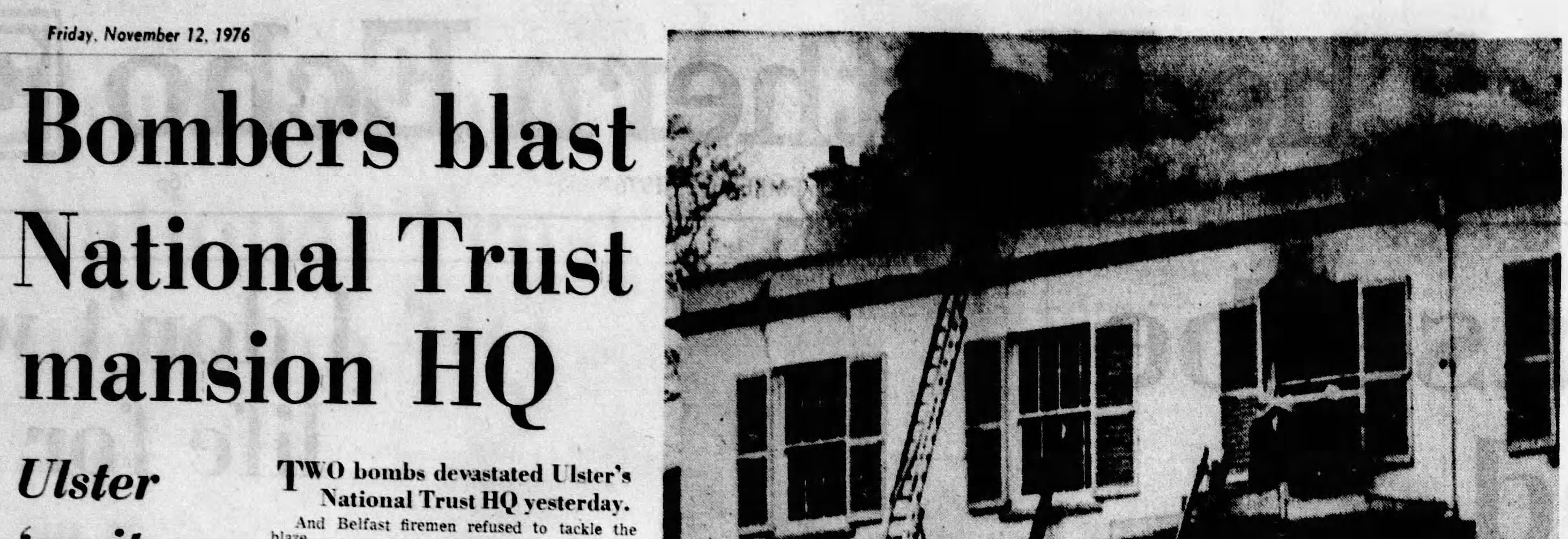
This is what happened to the headquarters of the National Trust in the suburbs of Belfast in November 1976. Not only was a much loved Georgian mansion destroyed – but also a vast collection of historic textiles and costumes. About ten thousand items were incinerated. Yet while this tragedy unfolded, firefighters drove off. Why?
Organised labour at the height of its power
This was an era when trades unions were at the height of their power and influence, determined to improve the living standards and conditions of their members. But on occasion, a particular form of industrial action raised uncomfortable questions – and even alienated public opinion. In 1976, Belfast firefighters declared that they would no longer tackle fires caused by terrorist bombs if there was no risk to human life – unless they were paid five pounds a day in “danger money”.
A month earlier, firefighters had shown they were serious about this course of action. When a fire broke out at the Clarendon Dock in central Belfast, the fire brigade showed up but then left when told it was the result of a bomb set off inside a car. Men from another fire station refused to attend the blaze. Exasperated, the divisional commander donned firefighting equipment and went to put out the fire himself.
Meanwhile two men and one woman – three terrorists – held up a security guard at the Academy Award shirt factory in Belfast and planted a bomb on the first floor. A few minutes later, it exploded, blowing out windows. Firefighters rushed to the scene but then turned round when told the fire was bomb-related. Two police officers grabbed a hose pipe and extinguished the flames – one of them injuring his hand.
Malone House consumed by fire
It took several part-time firefighters to put out the fire at Malone House but the property was left gutted. An officer for the National Trust told journalists that when the full-time firefighters left, one half of the building wasn’t affected by the fire. Their decision to quit the scene meant an opportunity to bring the unfolding disaster under control was lost.
That month, The Guardian newspaper reported that when the unofficial union action had begun, there was widespread public support for the firefighters. But the Malone House inferno “tipped the balance of public opinion against the action committee”.