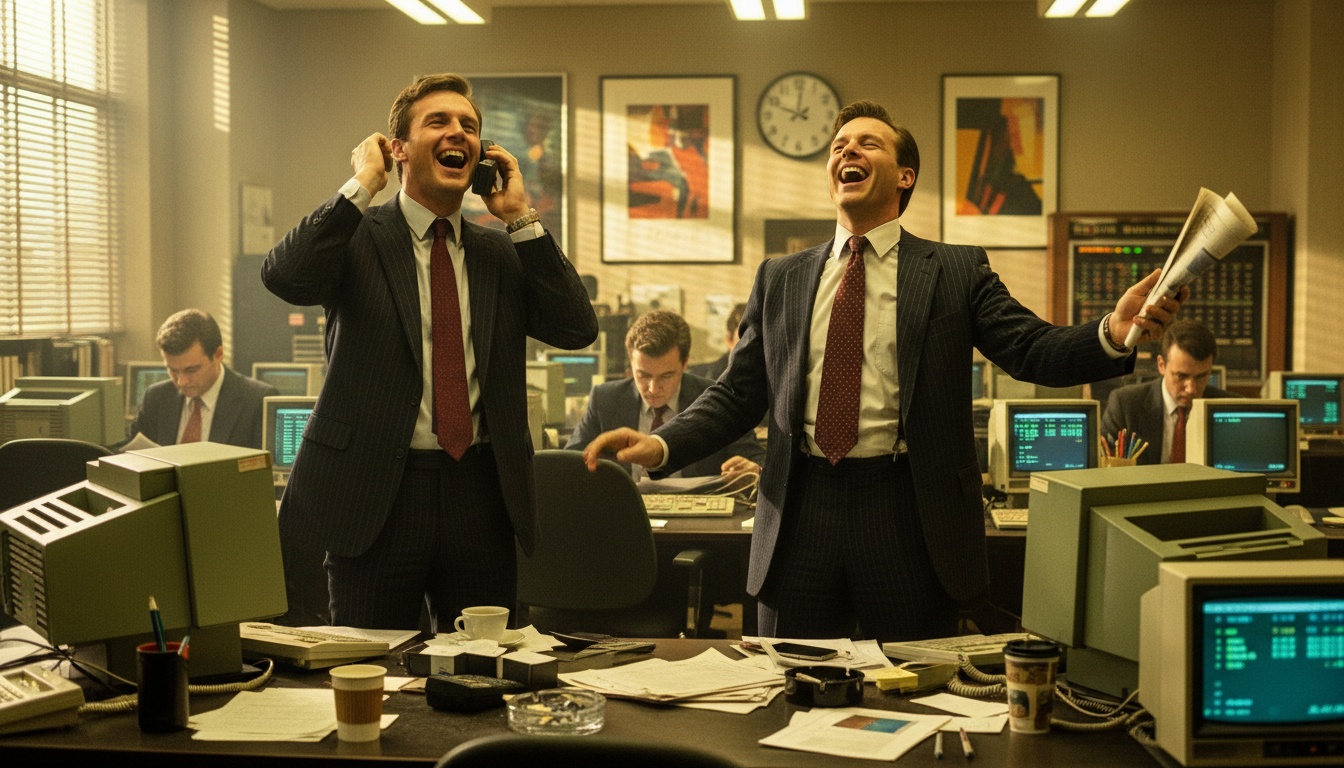
It may seem incredible but Britain beat Facebook by four years to create a social media website that reunited old friends across the globe – and became an early online sensation. But, as is so often the case with Great British inventions, other countries took the idea, improved on it, and ultimately dominated. So let’s look at the phenomenon that was Friends Reunited and follow the development of social media through to TikTok.
This is the second instalment of a two-part blog on how social media changed us from the 1990s onwards. How most of us went from leading invisible lives to becoming global influencers, broadcasters, or just nasty, attention seeking trolls.
For Boomers and Gen-Xers, it’s been a hugely transformative journey – while for today’s Gen-Z, being a social media star is second nature. Strange that Zoomers often accuse Boomers of being narcissistic because I can’t think of a generation in history that’s yearned so much to be captured every hour of the day on camera sharing “hacks”, pet peeves, or just showing off. Combined with the dangerous post-modern view that all opinions are of equal merit – making the statement of objective facts almost impossible.
Anyway, I want to show how the early promise of creating a safe and accepting space became the complete opposite – a bully pulpit and feeding frenzy for psychological misfits, rogue states, troll factories, and fraudsters.
Friends Reunited – how Britain missed the boat
In the year 2000, at the start of a brand new millennium, a husband and wife team – Steve and Julie Pankhurst – along with their friend Jason Porter – launched Friends Reunited. It was to be British equivalent of an American website: classmates.com In the years that followed, a fifth of the UK population coughed up £5 a year (later raised to £7.50) to reconnect with old school and college mates.
Its impact was huge. Second World War evacuees who had lost contact with each other were able to reconnect. This was a truly novel experience. However, the moral panic wasn’t far behind. Stories began to hit the press about middle aged men and women tracking down their old flames from school and then leaving their current spouse, and sometimes children, to resume an old relationship. The company retorted that it could hardly be held to blame for marriages that were already, clearly, in trouble.
I approached Friends Reunited with some trepidation. Like a lot of my generation, in those early days of digital, I quite liked the freedom to move on from the past. An old chapter closing and a new chapter opening. If I was no longer in contact with someone I’d known in the 1970s, 1980s and 1990s – there was probably a good reason. And wasn’t it more important to have forward momentum in your life, as opposed to looking back all the time? Plus there was the punk ethos of the 1970s, still in our psyche, where all nostalgia was regarded as evil.
Having opened an account, I was very open about having come out about my sexuality in recent years as an LGBT man. Within weeks, a woman I’d gone out with at university in the 1980s sent me a rather mournful message: “Is it my fault?” This was a conversation I didn’t want – and I closed the account down.
In 2005, the trio that founded Friends Reunited sold the company to the independent TV giant ITV for £175m. This made them multi-millionaires. But there were dark clouds on the horizon in the shape of Facebook, Bebo, and MySpace. By 2008, the number of users was declining precipitously. Dropping the annual subscription fee failed to improve the situation. So, in 2009, ITV sold Friends Reunited to Brightsolid – a subsidiary of the Scottish publisher DC Thompson, which was the brains behind comics like The Beano and The Dandy. That didn’t work out. In 2016, the site was shut down permanently.
It had failed to meet the challenge of Facebook, launched in 2004. The death of Friends Reunited illustrated how the big media giants in the 2000s were blindsided by the emergence of players like Facebook, led by snotty-nosed, arrogant, young geeks. They had a long and painful learning process ahead of them.
ITV bought Friends Reunited but failed to revive its fortunes. However, it taught the company valuable lessons about the online world. In the same year that ITV made that disastrous acquisition, Rupert Murdoch’s News Corporation bought MySpace for US$580 million. By 2011, it sold on a much diminished operation to Justin Timberlake for US$35 million. It took years for Murdoch to be convinced that the internet was the future and then when he committed, his investment went up in flames.
Yet as we know, social media didn’t go away.
DISCOVER: The Toxteth Riots of 1981
Forward to TikTok
From my own personal experience of using these sites, although MySpace was very popular, it was focussed heavily on bands. And while it allowed users to create very personalised profile pages, you needed to be damn good at HTML code. Teens took to it with ease but older age groups were left scratching their heads. As for Bebo, it was like the poor cousin of Facebook, struggling for relevance before being put out of its misery in 2013.
In short, Facebook emerged triumphant. It was just so much more intuitive to use. Soon, I was setting up Facebook community pages to promote two books on boxing and the Knights Templar – very different topics! Rather like Wikipedia, you could find yourself in hot water if a moderator – or just another user who wanted to make your life difficult – reported you for an alleged misdeed.
In my case, setting up a community page about my Templar novel under the name of the main protagonist – a medieval knight called William de Mandeville – led somebody in Florida to try their utmost to shut me down because this character was not a real person!
I appealed and got the page reinstated. While I’ve always agreed that hate speech must be tackled, I can see why plenty of Facebook users, of all political stripes, came to resent unjustified, overbearing sanctions. It was particularly galling when an account was suspended for nudity (not me, let me assure you) while somebody else was denying the Holocaust and getting away with it…for a while.
Tackling rising hate speech and radicalisation
In the 2010s, I became a consultant to several government funded programs tackling violent extremism and terrorism. I even co-authored a book – The Battle for British Islam – with the UK government’s counter-extremism commissioner, Dame Sara Khan. During that decade, where the salafi-jihadist group ISIS posed a huge threat in the UK, the social media giants were prepared to work with community groups to help them tackle online radicalisation. The task was to stop terrorists influencing young people through social media and the dark web.
The threat seemed to come from the peripheries – mainly violent Islamism and the neo-Nazi Extreme Right. But since the 2010s, all kinds of previously unacceptable views have moved into the mainstream. At the same time, social media companies have either watered down their monitoring of hate speech or even, in the case of X (previously Twitter), handed it a platform.
The rise and rise of sh_tposting
I’m very active on TikTok promoting my history books and follow a lot of news and current affairs sites. I’m drawn to the comments section below these videos, almost as a guilty pleasure. Although I’m normally enraged within seconds.
What I can’t abide is the phenomenon known as “sh_tposting”. The often appallingly cruel comments made by sociopathic individuals with a follower base of zero or under a hundred. Then there are those clearly lying about their identity or life experience. For example “All of Canada loves you President Trump” from a user who is clearly nowhere near Canada. And in my hate list, that’s followed by coordinated trolling where several users say exactly the same thing about a video.
The problem with many sh_tposters is that they think they’re comedians when in fact, they haven’t got a witty bone in their body. But they don’t care. Like a persistent weed in your garden, they just keep growing back again and again. And their content has become organised, professionalised, multi-media, and spread across several platforms from TikTok to Reddit and Quora, etc. Indeed, there are advisers online telling companies and businesses how to use sh-tposting to grow their revenue.
The rise and rise and sh_tposting is fuelled by the inability of millions of people to read long-form content, let alone books, and who have zero grasp of nuance and context. They just desire the dopamine hit of an unpleasant meme or needlessly vicious comment. And that’s how we end up with governments run to satisfy these people. Welcome to your future!