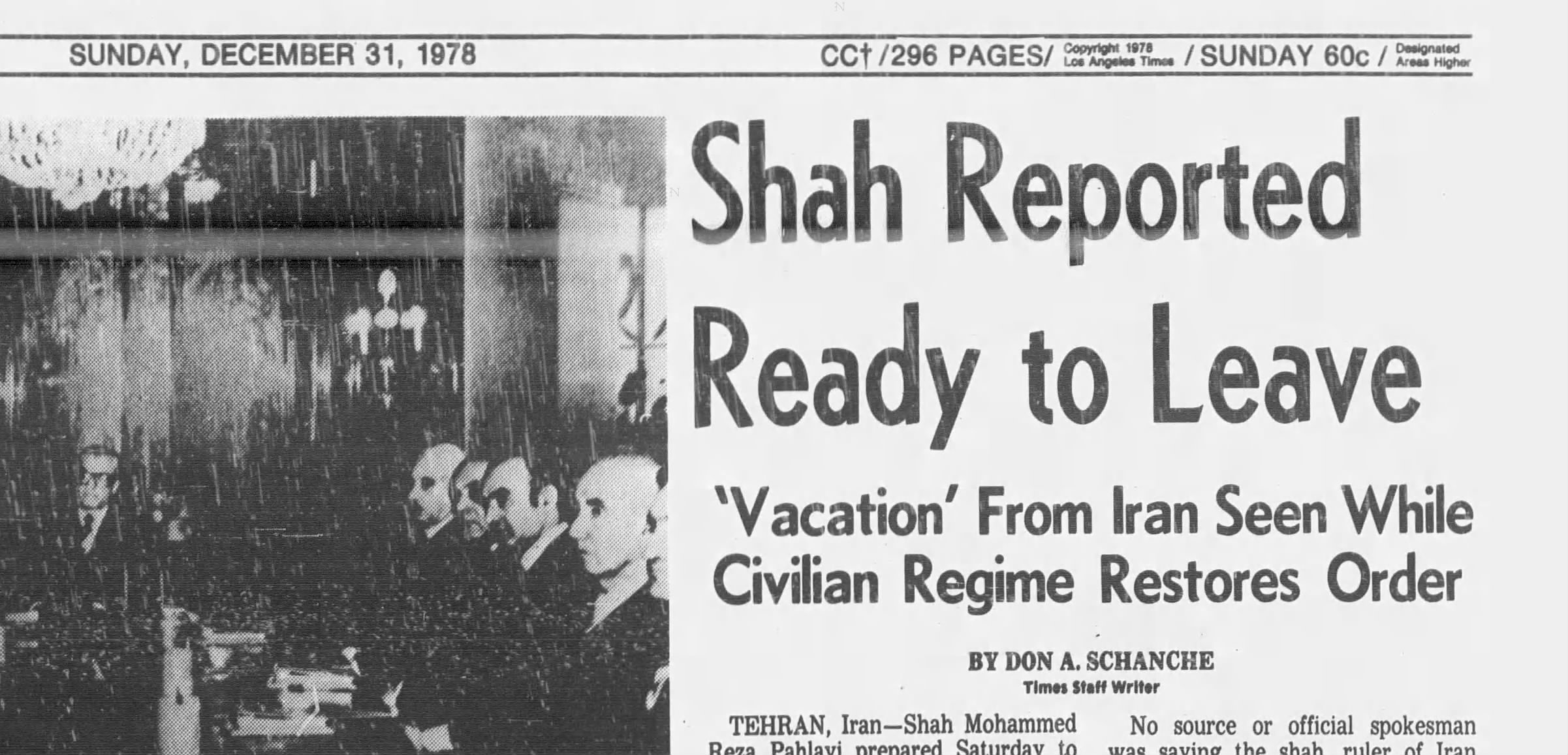
Imagine your plane being hijacked by nine fanatical ninjas wielding Samurai swords. That was the nasty surprise that lay in store for passengers on Japan Airlines Flight 351 in March, 1970. Members of the Japanese Red Army Faction suddenly leaped from their seats wielding the deadly swords and demanding control of the plane.
You may well ask – how did they get on board with samurai swords? And the simple answer is that airport security was a little lax back in those days. However, by the time an epidemic of hijackings had hit several airlines around the world through the early 1970s, things changed dramatically.
Meanwhile on Flight 351, the wannabe young student Samurai had tied the hands of every male passenger on board. They demanded the plane divert to Havana, Cuba, where they hoped to be trained as Communist commandos. The group had a dream of making Japan the global centre of the proletarian socialist revolution. However, the pilot pointed out that the plane had insufficient fuel to make such a long journey.
So, the hijackers demanded they be flown to the capital of North Korea, Pyongyang. The pilot agreed. But unbeknown to the revolutionary Samurai, the crew had been given coded messages to fly the plane to certain coordinates, which directed them to an airport in Seoul, the capital of South Korea. And in what seems like a scene from a comedy movie, that airport “disguised” itself as Pyongyang airport. The plane then landed and only when it hit the ground did the hijackers realised they’d been hoodwinked.
Worse, it turned out that North Korea didn’t want them anyway, referring to the group of Samurai as “Trotskyites or criminals”. Behind the scenes, the Japanese Communist Party – which loathed the Red Army Faction – had reached out to the Communist government of North Korea to explain the situation from their point of view – which was hostile to the hijackers. The permanently paranoid North Koreans suspected that the whole hijacking incident was a ruse by the Japanese government to discredit their country by getting them to shelter hijackers.
However, some of the hijackers did end up in self-imposed exile in North Korea while others went to prison in Japan. In 2024, the exiles, now elderly, pleaded to return to Japan but to my knowledge, they were turned down.
Between 1968 and 1972, there were an estimated 305 hijackings globally. It’s even referred to as the “Golden Age of Hijacking”. The next incident was the most notorious of the 70s.
Palestinian mass hijackings in the 1970s
If there was ever a decade for airplane hijackings – it was the 1970s. In what has to be the most audacious hijacker incident of the decade, four airplanes were seized mid-air by a Palestinian terror group. It would have been five planes if the hijackers on that flight hadn’t botched it.
In September 1970, the Popular Front for the Liberation of Palestine seized three commercial flights mid-air (run by TWA, BOAC, and Swissair) and instead of arriving in New York or London, the passengers found themselves on a remote desert airstrip, known as Dawson’s Field, in the middle of Jordan.
Unwisely, the group also tried to hijack an El Al flight, the national carrier of Israel. They met resistance on board and were overpowered. Passengers on the other flights were not so lucky. Their planes ended up in the middle of an unfamiliar desert where they had to sweat it out with their captors. After evacuating the hostages, the planes were blown up as this dramatic footage shows.
DISCOVER: Truck Hijackings in the 1970s
As mentioned, there was a British (BOAC) plane involved. BOAC was a British airline that was eventually merged into British Airways. On board that hijacked plane were 21 British children who had been on holiday with their parents, working as expatriates in the Gulf. In other words the sons and daughters of oil company executives, bankers, and diplomats, accompanied by a paid minder. The plane had been flying from Bombay to London, stopping off at Dubai, where the children boarded.
In London, the British government went into hyperdrive to try and secure the safe release of the British hostages. Fortunately, terrorists in the 1970s were less suicidal than they are today. The prevailing ideologies were nationalism and Marxism, as opposed to theocratic jihadism, which meant that fairly sane negotiations were possible.
Even though the El Al hijacking had been foiled just before the BOAC hijacking took place, newspaper reports noted that while luggage was searched, there were no body checks. So, the hijackers, with sticks of dynamite strapped to their torso, simply marched on board to fly with BOAC. With the hijackers in control, the BOAC plane circled Beirut airport for an hour before landing to refuel, by which time other terrorists in the same group had – incredibly – taken over the airport’s control tower!
Another plane, operated by PanAm, was also hijacked, flown to Cairo, and blown up. It was deemed to big to land at Dawson’s Field. But enough of the Middle East…
The Soviet hijackers and a shootout in the skies
Many hijackers wanted to be flown to Communist countries. In the 1970s, they had quite a choice. Including, of course, the Soviet Union. But in 1970, the Soviet Union became a victim of the hijacking craze in what has to be one of the most terrifying incidents.
Pranas Brazinskas, a Lithuanian (when Lithuania was part of the Soviet Union), and his son Algirdas, aged 13, seized a domestic Aeroflot flight. They booked seats close to the cockpit and then calmly informed the flight attendant that they were hijacking the plane. She attempted to block their way to the cockpit and they produced “rusty old guns”, shooting her dead.
I know. Firearms. On a plane. How? Again, one must point out, that security was not all that.
The plane was diverted to Turkey where father and son disembarked and surrendered to the authorities who promptly sent them to prison. There they languished until 1974 when they were allowed to leave for Venezuela, and then Canada, and finally the United States. Fuming, the Soviets insisted that Pranas Brazinskas was a petty criminal. This was hotly denied. Pranas hit back saying he was part of a Lithuanian resistance movement fighting for independence from Soviet control. To the dismay of the Soviet Union, the duo were allowed to remain in America, though never granted political asylum.
Pranas Brazinskas changed his name to Frank White and his son became Albert Victor White. Father and son began a new life in America. But the story doesn’t have a happy ending. Because in 2002, Algirdas shot his father dead during a family argument.