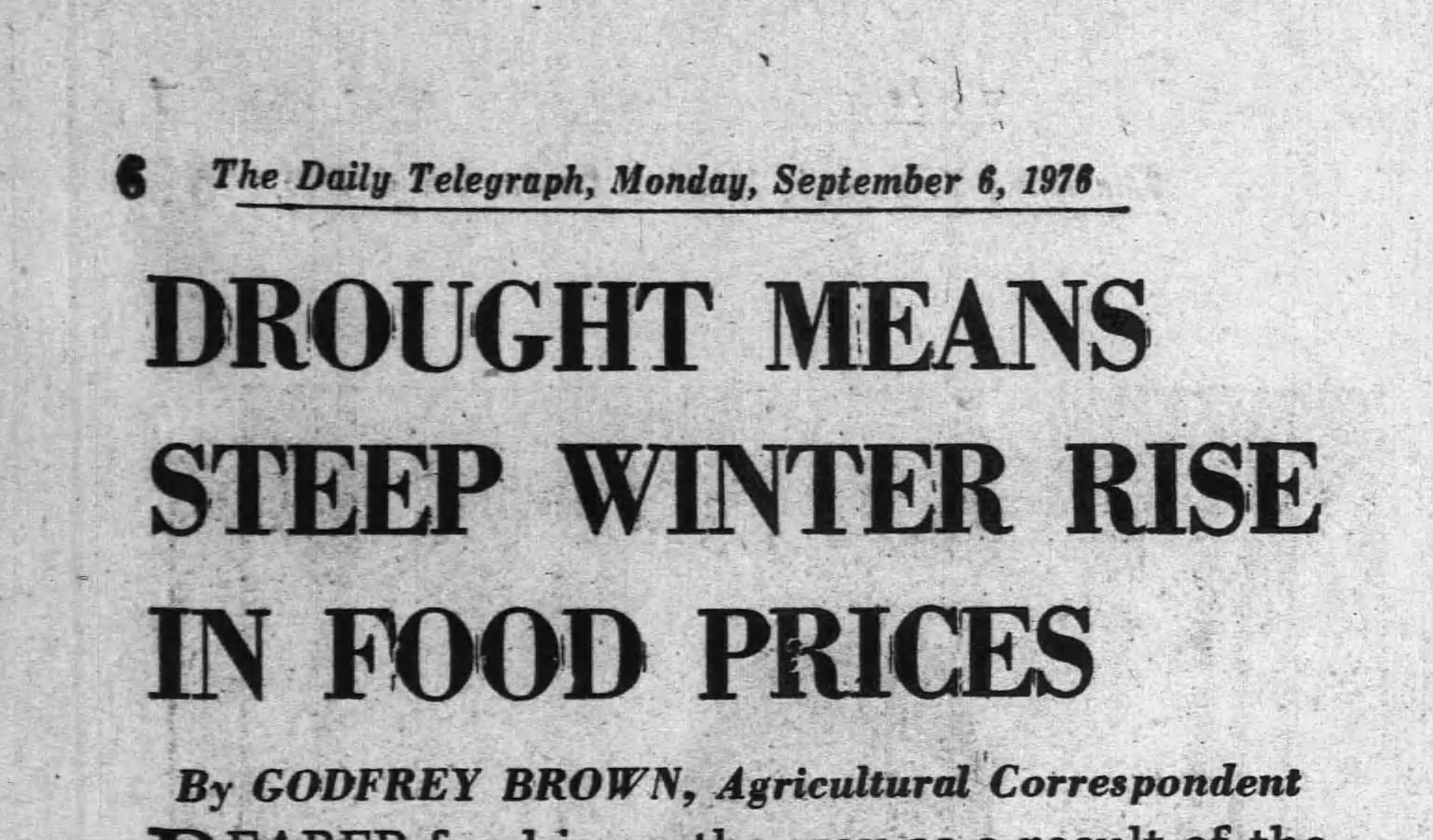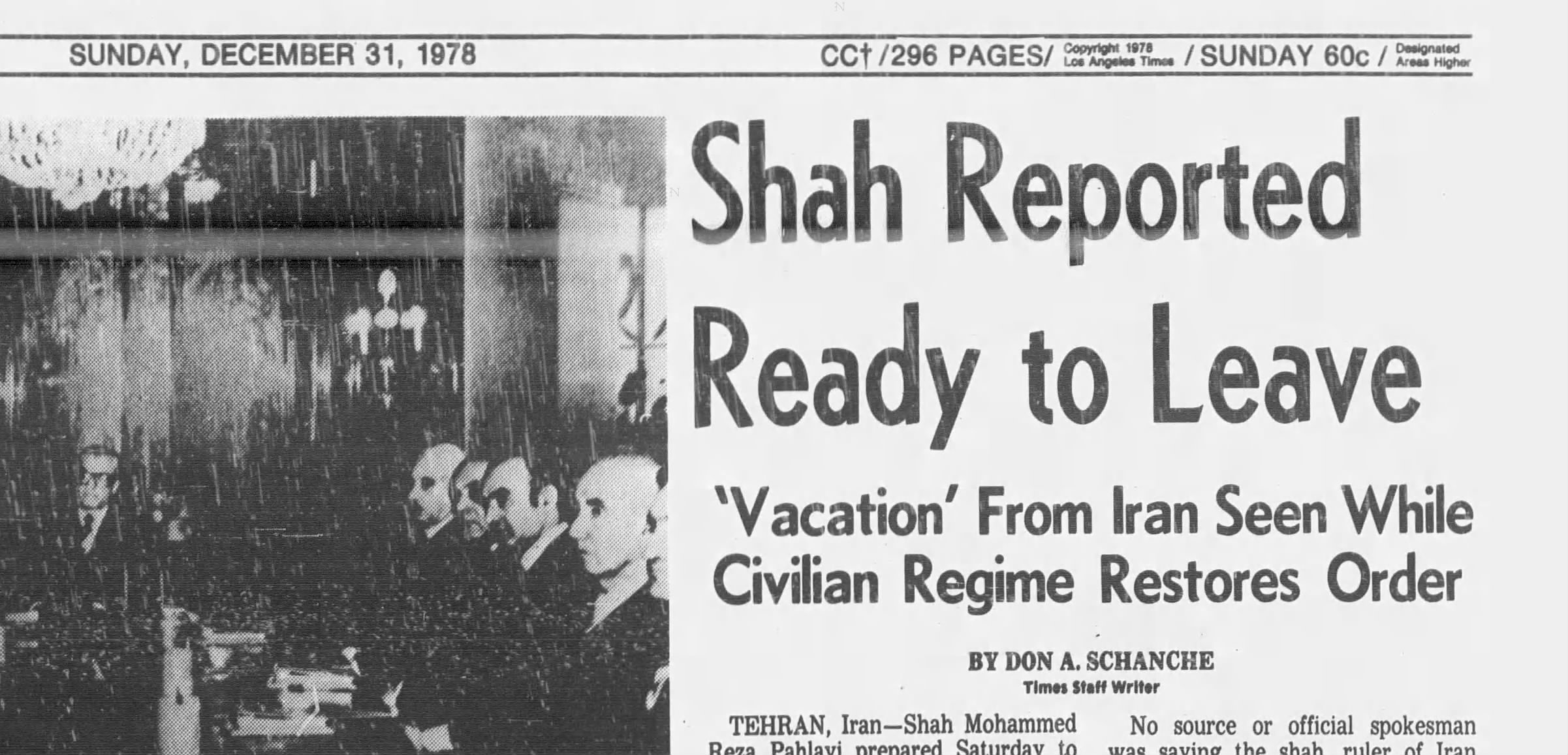
Iran is on the verge of revolutionary change not seen since the Shah was overthrown in 1979. So, I thought it would be interesting to look at how Iran was being covered by the global media in 1978, the year before the country became an Islamic republic.
Nobody doubted in 1978 that Shah Mohammad Reza Pahlavi, who had ruled Iran with an iron hand for 38 years, was in deep trouble. The title ‘shah’ translates as king and the shahs often styled themselves as shāhanshāh or king of kings. This dated back to the rulers of ancient Persia. The Pahlavi dynasty was relatively short lived, starting in 1925. There were only two shahs, father and son, with the last shah taking power in 1941.
It’s hard to believe now but Iran was a staunch ally of the west up until 1979. The country experienced rapid modernisation and economic growth, largely fuelled by oil exports. Countries receiving Iranian oil included Israel with supplies piped via the Eilat-Ashkelon pipeline that bypassed neighbouring hostile Arab countries and was a 50/50 venture between Israel and Iran. The Israelis nationalised it after 1979.
Oil was also exported to western economies whose own energy companies were heavily invested in Iran. Also, exports headed to the Communist bloc, India, and apartheid-ruled South Africa.
Position of women in Iran
Women in Iran gained the vote in 1963 and had the legal right to access high ranking jobs including ambassadors and government ministers. The Family Protection Law of 1975 was also a significant step forward for women, improving divorce rights, child custody, and banning the practice of polygamy. From as early as 1937, women were able to go to university and gain higher education qualifications.
How women dressed became an obsession of the Islamic republic after 1979 with the wearing of the full-length ‘chador’ becoming compulsory. This was in marked contrast to the situation under the shah as many images, often circulated on social media, evidences.
In some areas, conservative religious codes prevailed but in the large cities, especially the capital, women could wear western fashions, including the 1970s mini skirt. The shah viewed the rejection of full-body veiling as a sign of loyalty to the regime. The opposite prevailed after 1979 when the mullahs took over.

FIND OUT MORE: Overthrow of the shah in 1979
Political disintegration in 1978
Few analysts were optimistic about the Shah’s prospects of continuing in power much longer, by 1978. The likely scenarios given were that Iran would become a military dictatorship with the shah possibly retaining power; a religious dictatorship headed by the Shi’ite Muslim clergy; or a constitutional monarchy headed by the shah’s son, Reza, with his mother as regent. We know today which scenario prevailed.
Ayatollah Ruhollah Khomeini was Iran’s religious leader, exiled in Paris. From there, he fulminated daily against the shah. His ambition was to create a theocratic regime, imposing strict sharia law on the population. Women’s rights would be reversed but there were also less visible economic motives lurking in the shadows.
Among Khomeini’s supporters were landowners who resented the shah’s agrarian reforms as well as the ‘bazaari’ class of small businesses who hated the modernisation programmes that favoured big companies and modern shopping centres. They had been accused by the government of profiteering as well as opposing the influx of western goods. There was seething hatred in the bazaars.
The political Left messes up
Many of the early demonstrations against the shah began in the student sector. Among students and workers, left-wing parties like the pro-Soviet Tudeh party and Fedayeen were prominent. They organised workers councils in the oil industry and agitated on university campuses. But they were divided between Stalinists and Trotskyists, reformists and revolutionaries.
Theoretically, they could have led the revolution and directed it to a more secular goal. Certainly many on the Left have argued that ever since. But the balance of forces in 1978 may have always favoured a more conservative, religious outcome. As it was, socialist and communist parties made some howling blunders at the time.
Most fatally of all, the Tudeh party in particular, aligned with Khomeini and the mullahs. This was a disaster for the left. Khomeini’s people used the left in the run up to the revolution to gain further support among the people but then, having taken power, discarded the left. In 1982, there were mass arrests and executions of Tudeh members who must have realised their strategic error as they faced the hangman’s noose.
FIND OUT MORE: How the political Left messed up in Iran
The shah’s concessions fail
By 1978, the shah was making one concession after another to retain power. Political prisoners were freed, censorship was lifted, demonstrators shouting ‘death to the shah’ were ignored, and corrupt members of his administration were fired. But it was all too late. The revolution had become a runaway train. The only question was who would take control.