Nearly forty years ago, an LGBT bookshop in London was raided by customs officials leading to a court case against nine directors and staff who faced over a hundred charges. This proved to be a landmark case, largely forgotten now. It advanced gay rights while also raising questions about censorship by the authorities. Key issues that resonate today.
Operation Tiger
The Gay’s the Word bookshop was subjected to an over-the-top raid on April 10, 1984, by Customs and Excise Officers who barged their way in seizing hundreds of books as part of Operation Tiger. They also raided the homes of the bookshop’s directors while police descended on other gay bookstores, bars, and clubs across the country. This was a period of worsening homophobia as the AIDS epidemic became a tabloid scare story and the Tories drew up the discriminatory legislation that would come to be known as Clause 28, or Section 28.
The police had already attempted – unsuccessfully – to have Gay’s the Word classified as a sex shop. Given the hostility of public opinion towards gay people in 1984, it was depressingly easy to characterise any LGBT friendly content as borderline pornographic. The public had been conditioned to view LGBT people as depraved by “morality” campaigners in the 1970s like Mary Whitehouse. The United States had its equivalent with the anti-gay campaigner Anita Bryant.
Harvey Fierstein
To paint a picture of how LGBT content was being actively censored by the authorities – there is the curious case of Harvey Fierstein’s play, Torch Song Trilogy. In 1985, the theatre production came to London’s west end and was a sell-out. At the same time, the Gay’s the Word directors were still in court fighting their case. Fierstein arranged to have fifty copies of the book on which the play was based mailed to himself in London from New York to hand out as gifts to the cast members at the theatre. But the books never arrived.
Customs and Excise refused to comment but it emerged that ninety copies of the same book were seized during the Gay’s the Word bookshop raid though subsequently returned. Journalists had no doubt what had happened to Fierstein’s package. The producer of the theatre play, Robert Fox – brother of the actors James and Edward – condemned the disappearance of the books from New York.
But it was gay content – so fair game.
Police raids increase
This was a time when heavy handed police action against gay people often went unchallenged because…well…nobody expected to get any justice. Worse, these attacks on LGBT people were unreported outside of the gay press. For example, it took until the 21st century for the BBC to get comfortable about reporting on LGBT issues (despite having a huge number of gay employees – I was one of them in the 1990s) and in 1984, a letter to The Guardian bemoaned that liberal newspaper’s silence on the raids sweeping gay bars and bookstores.
In Scotland, the Lavender Menace bookstore was raided by police with no media coverage. The Bell pub in Kings Cross and the Royal Vauxhall Tavern were two London gay venues raided by police with an extraordinary level of aggression – as if they were busting a terrorist organisation. Undercover police were sent into the Coleherne pub in Earls Court to entrap men and most ridiculously of all, two gays who kissed outside The Golden Lion pub in Soho found themselves in court. Thankfully, the case was thrown out.
The media silence was deafening.
Enough is enough
However, on this occasion, enough was enough. Gay’s the Word decided to fight back.
A test case was brought by solicitors working for the National Council of Civil Liberties. They highlighted the absurdity of Operation Tiger given that the impounded books, due to be destroyed, included a collection of short stories by authors like Tennessee Williams and Kate Millett. The veteran poet Christopher Isherwood had described the book as “outstanding”.
The officer in charge of Operation Tiger was asked in court if he had ever heard or read any of the authors whose works had been taken away. These included Jean Genet, Allen Ginsberg, Ezra Pound, and the Roman poet Catullus. He had not. Lawyers for the bookshop wondered why such a macho name had been given to the operation: Tiger. Grrrr! A blushing customs official answered that it was not intended to be overly butch and that Tiger was the name of his cat!!!
Lack of training
In court, the customs officials admitted that they had been given no training or guidance on the legal definitions of indecency, obscenity, or literary merit. One official said he had seen a translation of Paul Verlaine’s poem “A Lover’s Cock” and without reading the content, decided that was sufficient to impound the work.
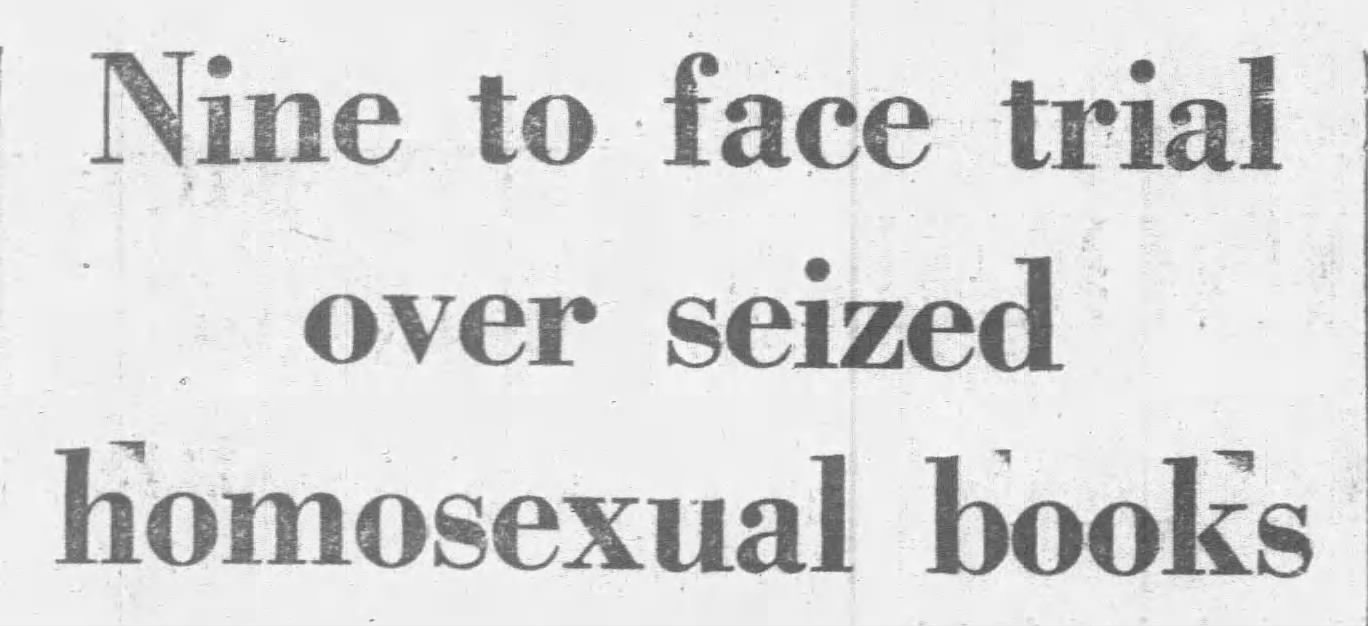
The case dragged on for months with nine directors and staff accused of importing indecent material and facing criminal convictions. Customs and Excise latched on to books like The Joy Of Lesbian Sex – even though Alex Comfort’s The Joy of Sex had been a global bestseller. It seemed that advising heterosexuals on how to have fun in bed was fine, but when it came to same sex relations, it was a different matter. At one point, an exasperated director of the bookshop said to applause in the courtroom: “We are booksellers, not pornographers”.
By November 1985, the lead singer of the now disbanded Bronski Beat – Jimmy Sommerville – was playing a benefit gig for Gay’s the Word as he launched his new band, The Communards. The feminist author Zoe Fairbairns found that she owed £79.95 in Value Added Tax (VAT) to Customs and Excise and made the bank cheque out to “the persecutors of Gay’s the Word bookshop”. To her amazement, it was cashed. The Bank of England told The Guardian newspaper that cheques with humorous comments were often accepted when the context was understood.
Public opinion not on side
Customs and police officers did not expect to face such fierce opposition to their actions from the gay community. The reason being that they had public opinion, most of the political class, and the media on their side.
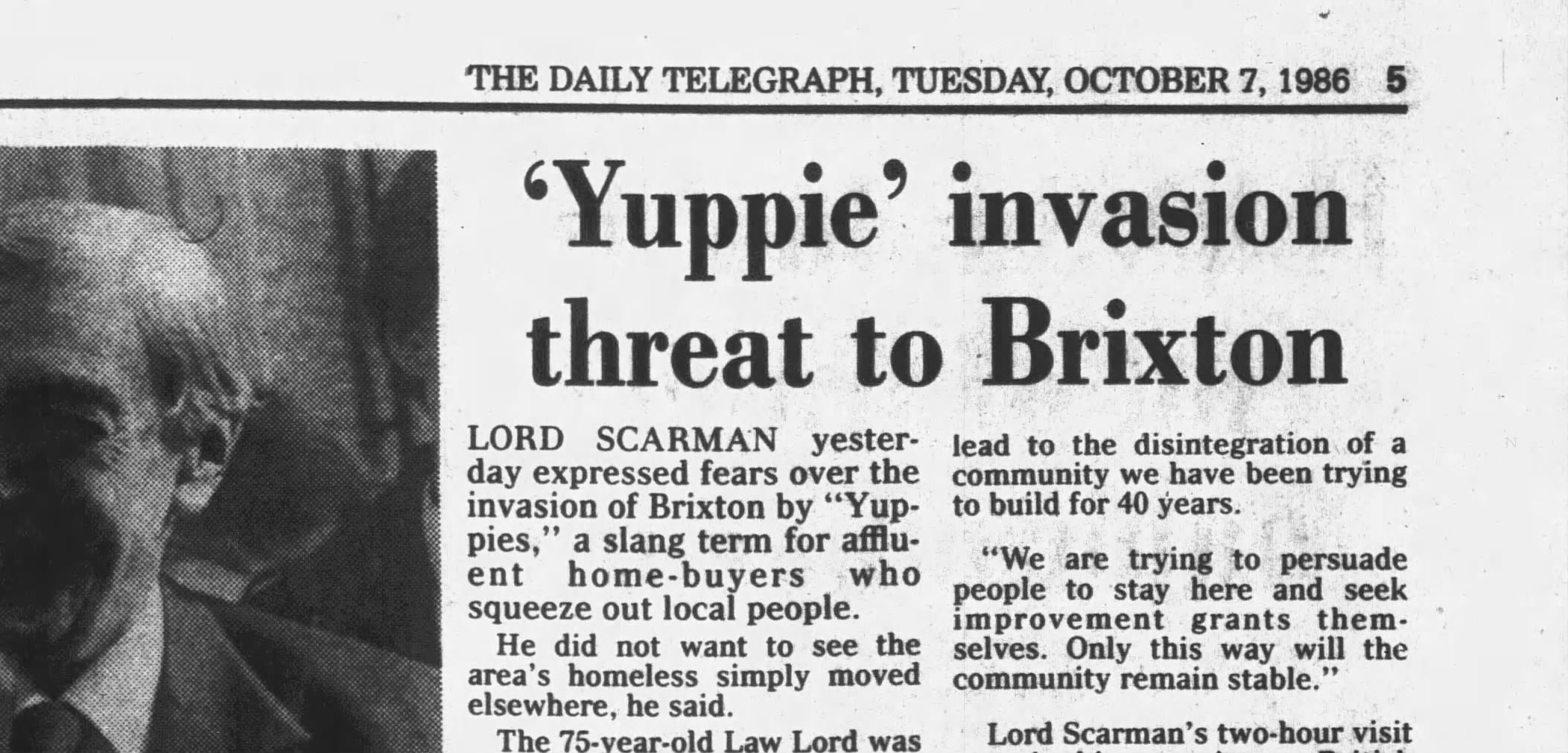
If you need a flavour of what appeared in newspapers back then, then these letters below to the Manchester Evening News during the trial should suffice. They included familiar moans – you still hear today – that “normal” people were being ignored and only minorities got favourable treatment. For the record – as a former journalist myself – I’m pretty convinced many of these letters were fabricated.

In June 1986, Customs and Excise dropped the case against the bookshop. They had not relented on their action or apologised for the raid. The reason for the retreat was a ruling by the European Court of Justice that undermined their case. The ECJ decided that it was unlawful to ban imported items that could be manufactured and traded in the home country. Many of the imported books sold at Gay’s the Word were already published and distributed in the UK.
This was a forgotten landmark moment for LGBT rights in the United Kingdom. It revealed why for a generation of Boomer activists, there are concerns about growing censorship. On the one hand, bigotry in print or on film should always be opposed. But at the same time, free speech is essential to defend LGBT rights. Authoritarianism is no friend of gay people.
Gay’s the Word is still in business today selling fiction and non-fiction books of interest to LGBT people.