OK – I’m going to nail my musical colours to the mast first and declare that back in the 1990s, I was in the Blur army and never really warmed to Oasis. To me, and many others, they were standard bearers for a Laddism that seemed to be dragging us back to the worst aspects of the 1970s. That may be unfair. But let’s look at how Oasis and the strange phenomenon of Laddism were viewed nearly thirty years ago.
Seems like yesterday…
The rise of Laddism – and Oasis
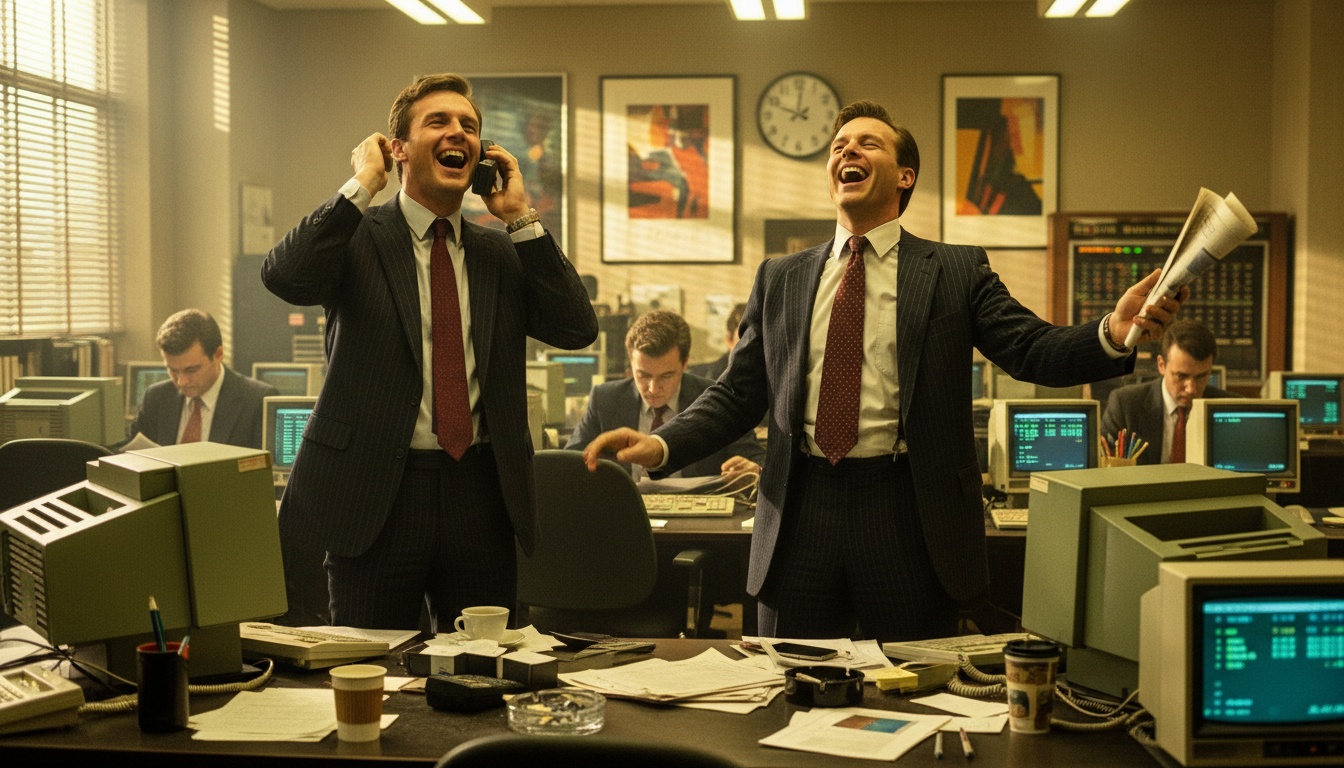
To understand the rise of Laddism, we have to step back into the late 1980s and the turn of the Nineties – just before Laddism struck. The yuppie ethos was at its height. Men were learning how to groom and change their fashion from one season to the next. The media told us this was the dawn of the “New Man”, a sensitive, well turned out, cultured creature. Something like a Regency dandy brought back to life. No longer the square-jawed hunks of the 1970s and definitely not muscle bound. “They love kids and animals, and they help grannies across the road” – as one journalist wrote in The Independent in 1990.
Another 1990 article said that men now wanted to pamper themselves and were adopting “female patterns of behaviour”. This, by the way, meant washing regularly, spending more than five minutes in the bathroom, and looking in the mirror while shaving. By this measure, all men today are borderline feminine compared to the 1970s. In that far off decade, men’s after shave (Brut 33) was advertised by boxers on TV telling men to “splash it all over”. By 1990s, splashing had been replaced by dabbing.

The New Man, as one commentator said (also in 1990) was “more thinking and philosophical” and preferred relationships than “pulling the birds”. But this was never going to last. The New Man was about to get the chop.
It’s doubtful that there was some genuine social movement to create Laddism. In retrospect, it looks more like bored journalists stirring the pot of residual sexism in society and pretending to be surprised that so many men still had Neanderthal attitudes to women. So it came to pass that in 1991, the New Man got the heave and in came the New Lad. Drunk, stinking of last night’s curry, and allergic to commitment in a relationship.
An article in the London Evening Standard in 1991 explained the New Lad and his credo of Laddism. Under pressure from feminism – men in the 1970s and 1980s had increasingly striven to understand the minds of women “and stuffed themselves with brown rice and green politics”. The newspaper claimed that London was full of forty-something despondent men who had “done everything they can to be nice, and still women won’t got to bed with them”. We would rightly condemn this as Incel logic today but it became all the rage from 1991. Men had been played by feminists “so the New Lad is the advance guard for the armies of Male Liberation”.
The Laddist argument ran that women wanted men to be real men – and not New Men. They missed lads being sexist, uncaring, and generally disgusting. Laddism was about men giving the feminism of the 1960s to 1980s the finger and reverting to type. Their bibles were magazines like Loaded, FHM, Maxim, and even the comic, Viz. Drinking copious amounts of beer, chatting endlessly about footie, and being potty-mouthed as you pleased was now de rigeur. Television executives responded with sitcoms and quiz shows shot through with the principles of Laddism.
Oasis became the musical personification of Laddism. The Gallaghers saw themselves as the new working-class heroes, taking the mantle from the late John Lennon, but there were key differences. The Beatles were painfully polite, reserved, and charming in interviews – though capable of causing offence, but usually not intentional. Maybe influenced by the punk wave of the late 1970s, Oasis were something of a contrast making a virtue of sneering and displaying their proletarian contempt. Whether they wanted it or not they became, in the eyes of the media, the high priests of Laddism.
By the late 1990s, it all began to wear a bit thin…
Euro 96 – the end of Laddism?

Central to the cult of Laddism was being either genuinely interested in football, or affecting an interest by endlessly dissecting the most recent games of the team you allegedly supported. Other Laddists around you would pretend to be as enraptured as you by the conversation. But when England was defeated in the semi-finals of the UEFA Euro football championship – that seemed to be a turning point. The machismo espoused by the Laddists fell apart as England footballer Paul “Gazza” Gascoigne shed tears on the pitch – behaving like a sensitive, tender human being.
It was arguably a sign of change.
At around this time, Newcastle Ale announced that the marketing of its beer – served at pubs in distinctive bottles and very popular in the 90s – would adopt a different approach. Gone was the slavish adherence to Laddism. Slogans influenced by the Laddist movement had included “Broon drinkers get straight to the pint” and “Size is important”. Broon was the name given to the beer by Geordies. The brewer had targeted magazines like GQ, Esquire, and Loaded with its macho messaging but now assured the media this was going to be toned down. “That phase has peaked”, a spokesman explained.
By 1998, Labour was back in power. Tony Blair was arguably more of a New Man than a New Lad. Although he was also capable of being a regular ‘bloke’ if it suited him. And famously, Noel Gallagher of Oasis attending a Downing Street reception not long after Blair came to power.
At the close of the decade, Laddism was derided as a sign of male weakness – not power. A last hurrah from increasingly emasculated men who were losing their self-esteem and economic power. One conference of academics in September 1998 described New Lads as “vulnerable man-children” – a “weed” out of his depth when confronted by profound societal changes. Liam Gallagher of Oasis was singled out for criticism with one academic saying that it wasn’t that the average New Lad pretended not to care about his appearance or behaviour – he genuinely didn’t.
Unsurprisingly, The Guardian newspaper – bible of Britain’s liberals – called time on Laddism. Though they conceded that the 1980s New Man had never been very credible, they didn’t feel the New Lad was a great alternative. Surely there had to be something better out there?
Just as a footnote – it should be pointed out that despite the gripes of New Lads that they were losing control of their lives and society – in 1997, 90% of MPs in parliament were men as well as 95% of company managing directors and 88% of police officers. Female empowerment had a long way to go.