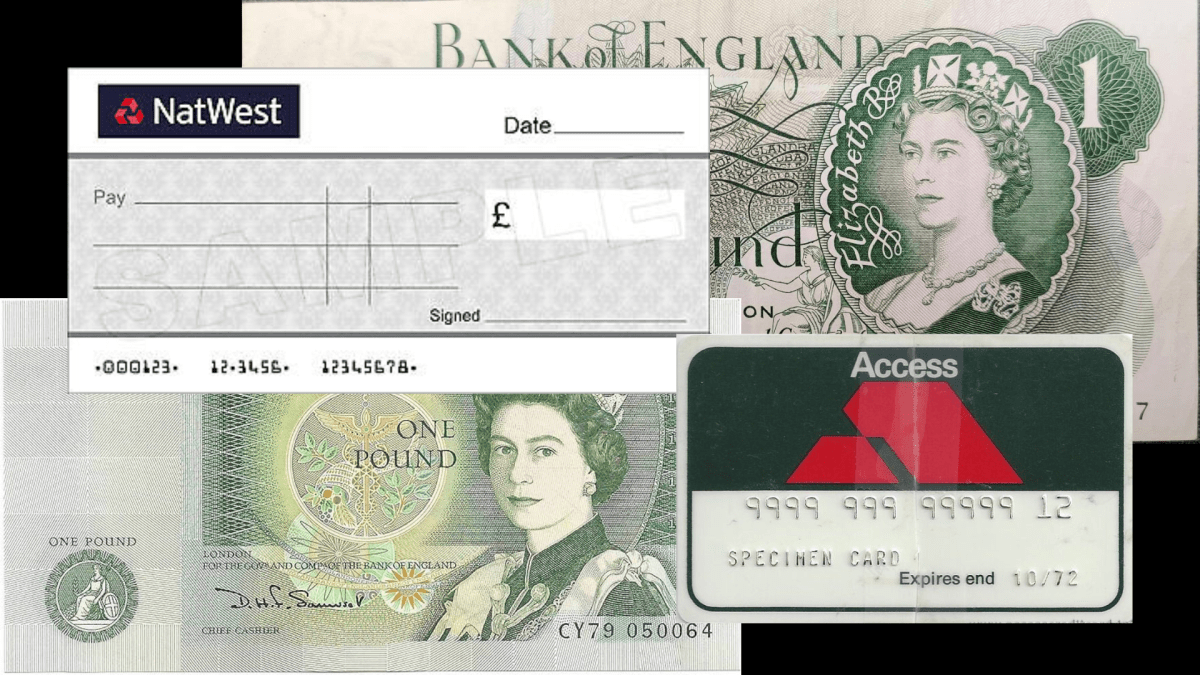
The bank cheque book was part of our lives in the late 20th century but now it’s hard to remember having a cheque book in your pocket. Let alone using one. While the credit card arrived in the 1970s – with the launch of Access – in my experience, most of us didn’t start running up massive debts on our plastic until the 1990s.
According to Barclays bank, 1990 was the peak of cheque book use. Four billion cheques were written that year. There was something quite exciting about receiving a new cheque book in the post. You’d flick through all those blank cheques knowing that very soon, it would be much thinner. In the early 1980s, I banked with NatWest and I remember they introduced cheques with colourful images of birds. That seemed terribly revolutionary.
Cash machines were used more frequently in the 1980s but if it refused to spew out the desired pub money, then you went and filled in a cheque with ‘Pay: Cash’ and got the readies over the counter. If your bank wasn’t prepared to honour your cheque, because you’d exceeded the overdraft limit, there was always an obliging bureau de change prepared to cash your cheques.
The Access credit card was launched in 1972 and after five years, about a million NatWest customers had got their hands on one. My parents shied away initially because like many in their generation, they were petrified of going into significant debt. That fear was something our generation set to one side as we racked up multi-thousand pound debts in the decades ahead. The Access card could be used across Europe from 1973 but I remember when, as a family, we drove down to Portugal every year, my parents would still take big plastic bags of French Francs, Spanish Pesetas, and Portuguese Escudos to pay for any costs.
Access was set up to rival Barclaycard and the company processed credit card payments for Lloyds Bank, Midland Bank (now HSBC), and NatWest. To get people comfortable using the plastic, they launched a high-profile advertising campaign in 1978 with the slogan: ‘Your Flexible Friend’. This was a very seductive message with the idea that that card in your pocket was helping you out. It took millions of people until the 21st century to realise their credit cards were crucifying their finances and were just about the worst way to borrow money.
Despite the rise of the credit card, cheque books were still ubiquitous. The BBC quiz show Blankety Blank awarded contestants a metal sculpture of a ‘Blankety Blank chequebook and pen’ while the practice of tabloid reporters paying their sources for stories was condemned as ‘chequebook journalism’. In the 1990s, I was still using cheque books in the UK and travellers cheques (normally using American Express cheques) when going abroad. The latter were a nightmare – trying to find a bank in Spain or Portugal that would accept them.
The upside of cheque book banking was that as a young person, you were simply not allowed to run up huge debts forty years ago. When my student overdraft touched one thousand pounds, I was called in to the bank for an interview with the manager to discuss how I was going to reduce this. Just a few years later, banks couldn’t do enough to help you run up massive debts. That was the main impact of moving from paper to plastic. Was that progress?