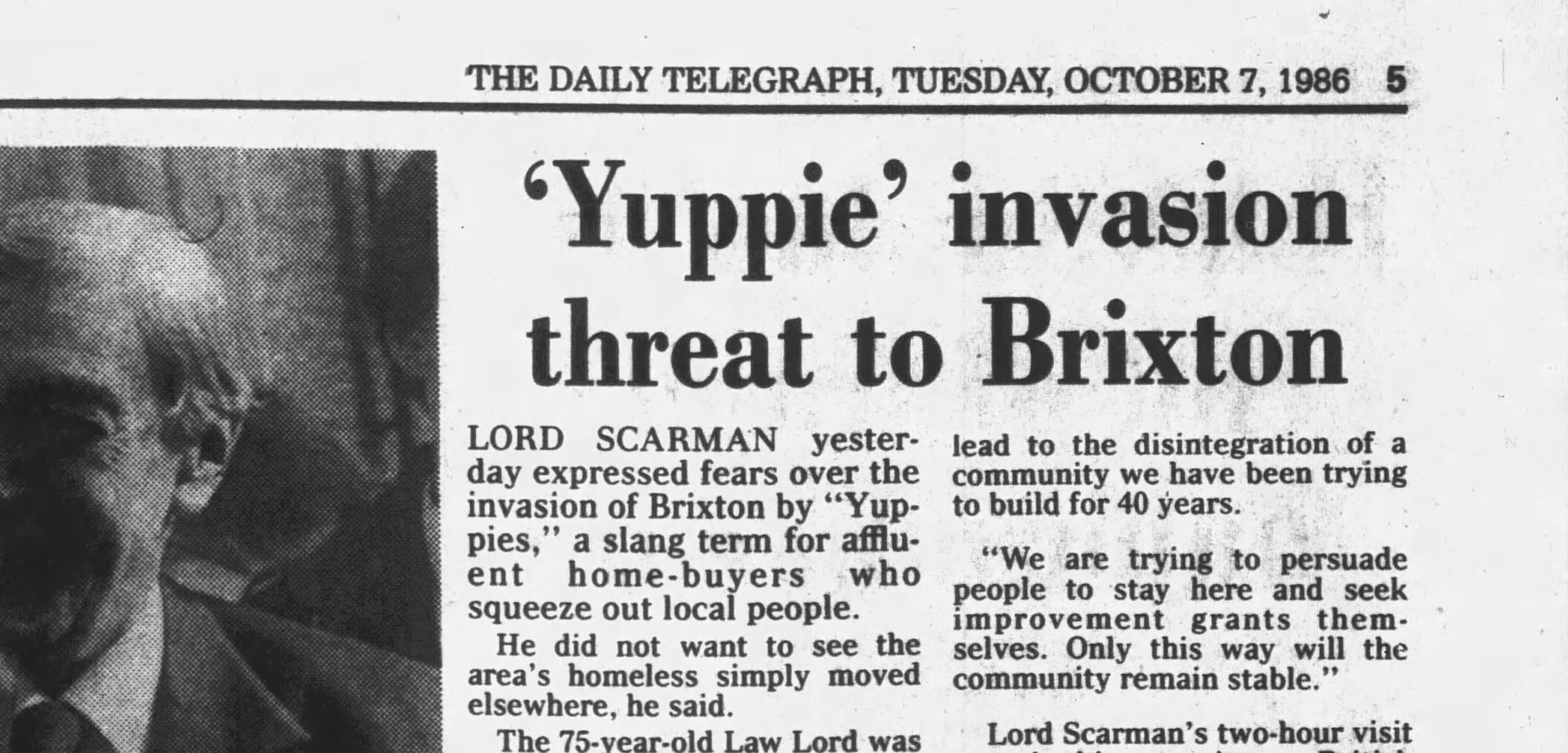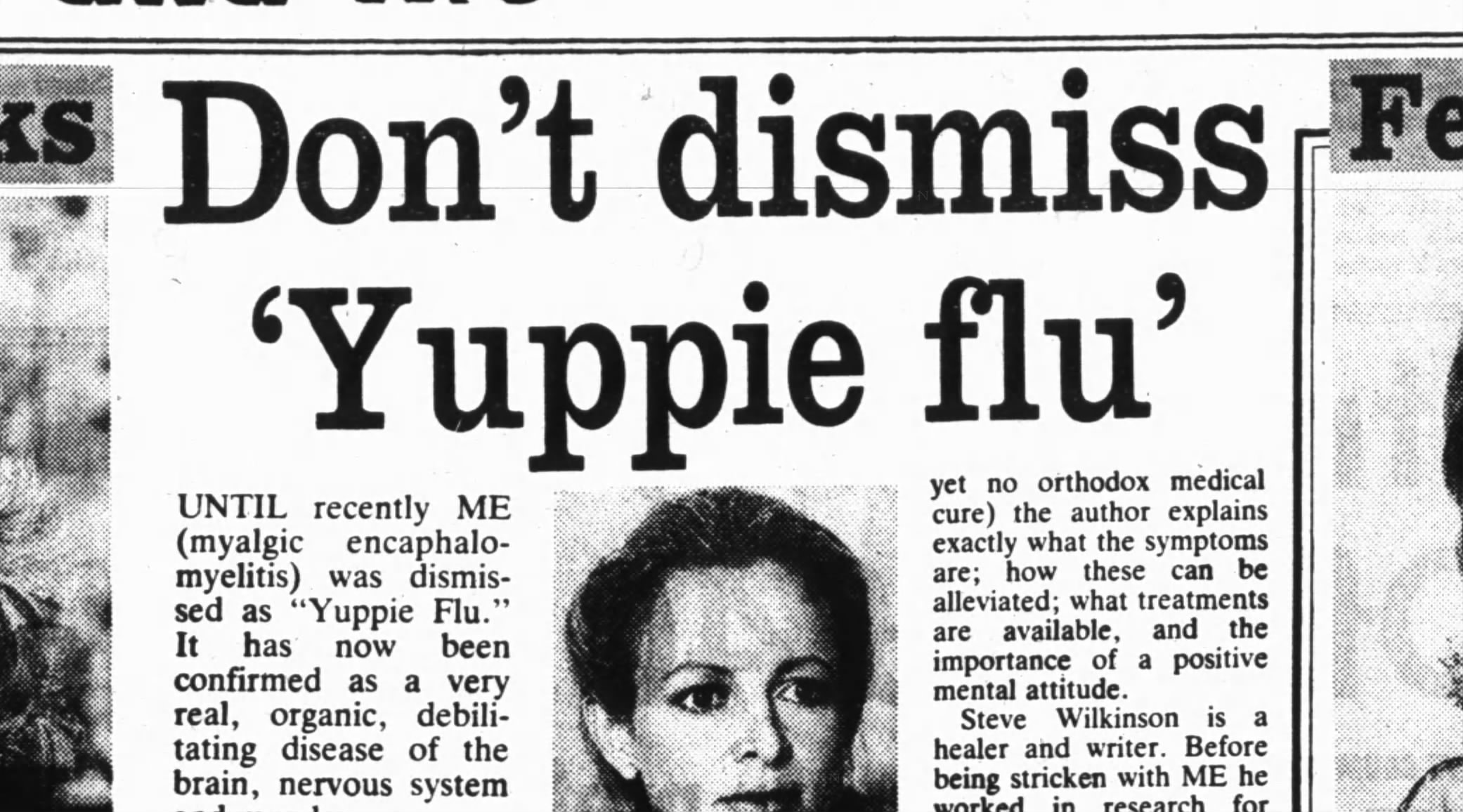
How did people with a long-term, debilitating neurological and immune condition, that left them unable to work, become objects of derision? Myalgic encephalomyelitis/chronic fatigue syndrome (ME/CFS) was nicknamed Yuppie Flu and dismissed as career burnout suffered by white-collar executives who just couldn’t take the heat. Remember – we’re in the 1980s now where compassion was something you ‘drooled’ according to the then Prime Minister, Margaret Thatcher. This was the law of the corporate jungle and the weaker members of the herd who couldn’t keep up….well, less said the better.
If you’ve watched the TV adaptation of Jilly Cooper’s novel, Rivals, you’ll know that 1980s Britain was the worst place to display any kind of weakness – including medical. Even those with AIDS were served up big dollops of hatred in the tabloid press and blamed for their own terminal condition. So, what hope for those who simply couldn’t make it into work. Well, we know from our own time that any form of absenteeism from the workplace is still regarded as shirking.
In 1987, having returned to London from my college years in Liverpool, I tried to become a real-life yuppie in the City of London. Taking a job as in a Lloyd’s brokerage, I spent three years pretending to reinsure oilfields while being pretty clueless about what I was doing. Fortunately, I eventually discovered that nearly everybody I was working with was similarly obtuse. It was high pressure – even more so when you struggled to know what you were doing. One chap, very well educated and quite bloke-ish, suddenly failed to appear in the office. He had been stricken with ‘yuppie flu’.
That year was when the government finally recognised that the condition even existed – and was impacting about 100,000 people nationally. Of course it wasn’t new, as sceptics sneered. Worst of all, family doctors often told sufferers that it was “all in the mind”, “depression”, or “hysteria” (the latter description reserved for female sufferers). The fact that it was nicknamed “yuppie flu” removed a great deal of sympathy from victims. Who cared if over-ambitious, Filofax-wielding City types felt under the weather?
But in reality, it could strike anybody. Eventually, my colleague re-emerged and I remember we took him to the pub – where all problems were solved in the 1980s – and welcomed him back in the traditional manner.